
My AI Partner
Before an important conversation, let AI walk you through the hard parts first.
Don't Rush to an Answer — Let It Find the Flaws First
In June, we discussed in the “AI Multimodal Workshop” how AI sees, hears and understands information in different forms. This month we want to take a step further and see whether, once these abilities enter everyday work, AI can become a personal assistant that truly helps.
For the first article in this series, I want to start with a method I have been using a lot lately: having AI find my flaws.
AI used to be much like a Q&A machine. You ask, it answers; you stop, it stops.
In the past, what I asked it most often was: “How should this be done?”
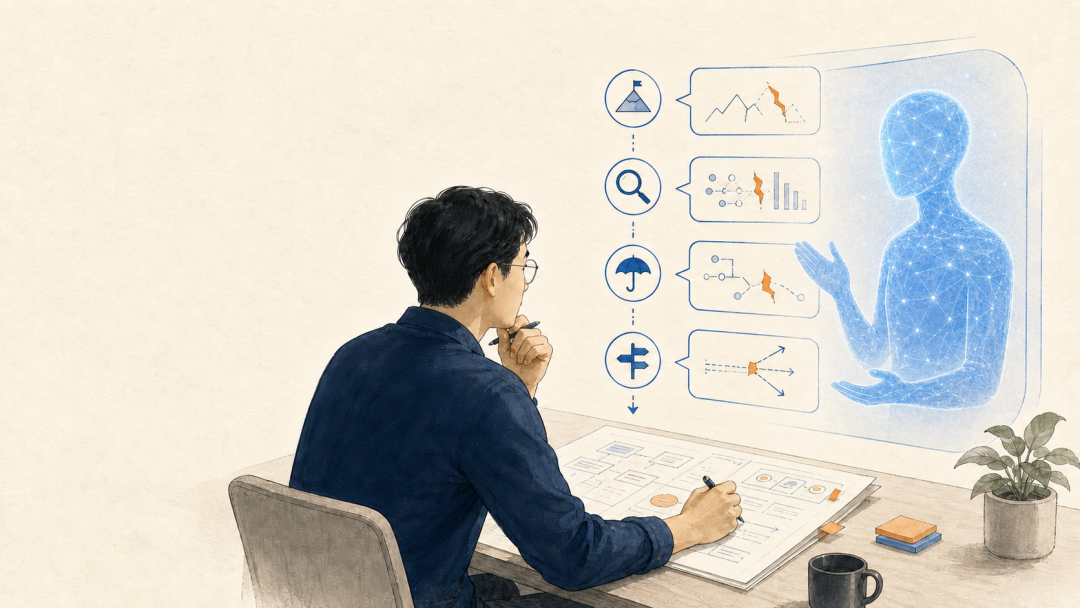
Now I prefer a different way of asking: don't rush to give advice. First take the opposing side and find the points I haven't thought through.
The first time I felt this way of using it was a bit different was while preparing a software architecture proposal.
The proposal already had a rough shape. Instead of having AI fill it in directly, I had it play the reviewer and press me from several directions: premises, resources, edge cases and maintenance cost. I added one layer, and it followed up with another question based on the new answer.
After a few rounds, I found the vague spots surfacing one by one. When I went back to revise the proposal, my thinking was actually much clearer than at the start.
Later I realised that software proposals are not the only thing that needs this kind of questioning. What stalls a lot of work is not “having no answer”, but that certain questions were never asked in advance.
AI doesn't have to go along with me on everything. Being able to ask “why” a few more times before something important begins is already very useful.
Some Questions Need Someone Who Keeps Asking
Those who write proposals fear being stumped by their boss before a presentation; those who do strategy fear discovering halfway through execution that a premise doesn't hold; those who deal with clients fear the other side suddenly raising an old matter they are unprepared for…
In the past, this kind of questioning usually depended on a colleague, boss or friend. But they are not always available, and it is hard for them to rehearse the same matter with us again and again.
That is why I started bringing AI into the process. This way of using it works now because of several very practical changes.
First, given a complete proposal, AI can now keep questioning along the lines of premises, evidence and conclusions. It doesn't necessarily understand everything, but its questions are more targeted than before, no longer circling a few keywords.
Second, it can handle more material at once. The proposal, the meeting context, the history and the constraints can sit in the same conversation. A longer context doesn't mean it won't miss things, but at least we don't have to explain everything from scratch each round.
Another change is that multi-turn conversations are more stable than before. Once you have it play a client or a reviewer, it can carry on asking based on your previous answer, instead of starting over after a single question.
Together, these changes are what let a conversation move from “question and answer” to repeated rehearsal around the same problem. Of course it still misreads and misses things, but that is already enough to help me re-examine my own thinking.
Over time I came to call this way of using it a “thinking partner”: before formally meeting a client, giving a presentation or attending a review, walk through the hard parts with it first. The two scenarios below should show best how it is used.
From “Giving Answers” to “Rehearsing Together”
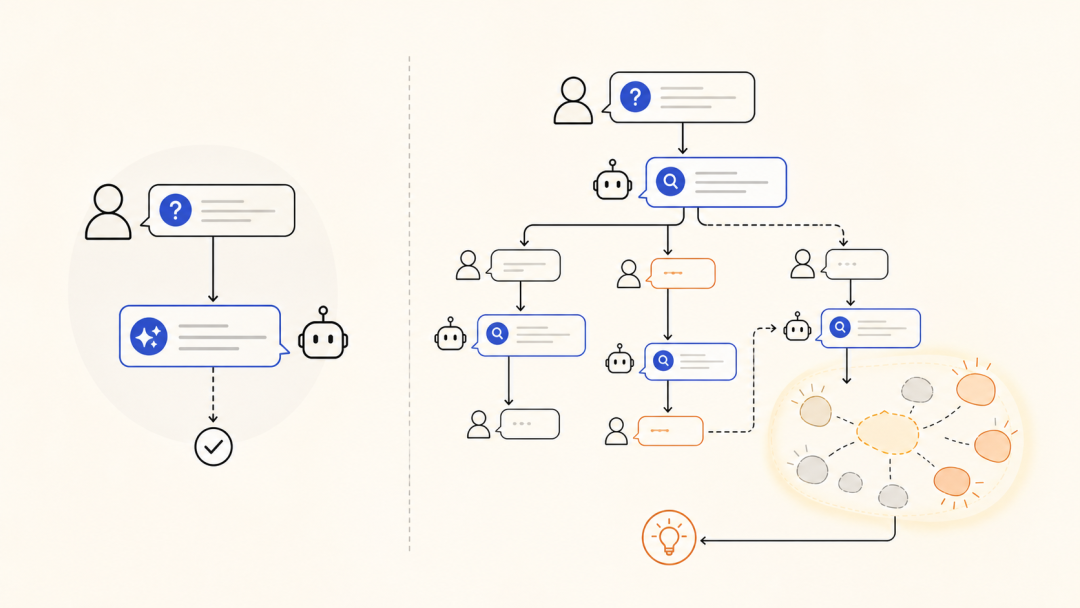
This is not handing judgement over to AI, but letting it raise the questions you have not yet got around to asking.
From question and answer to repeated rehearsal around the same problem, AI starts to feel more like a coach who is always present but never makes the call for you.
Its value lies not just in providing answers, but in helping you see your own blind spots.
Scenario One: An Account Manager Rehearses the Most Unpredictable Conversation First
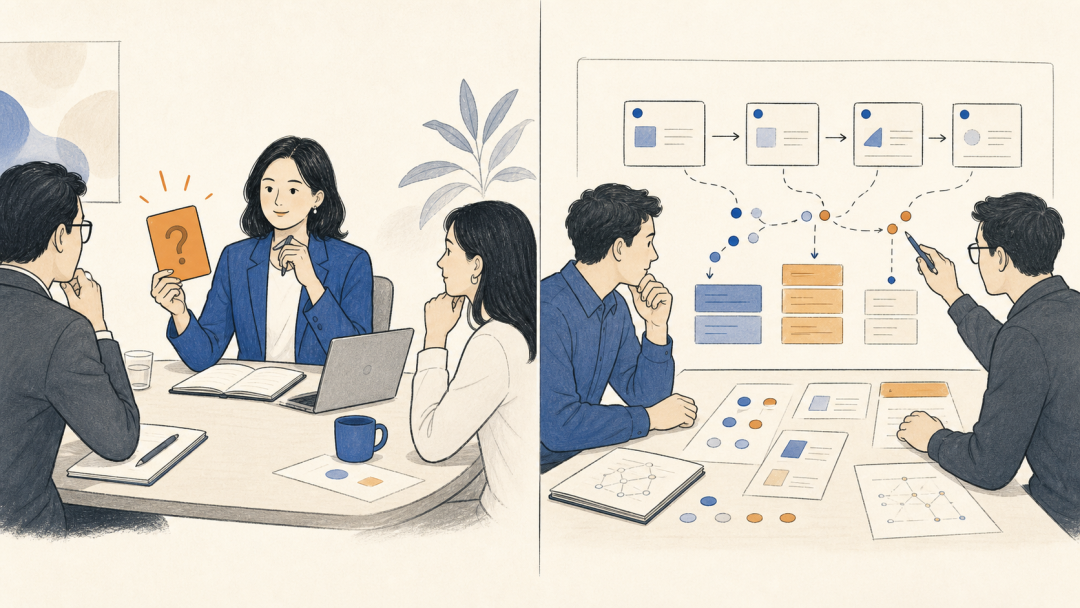
The pressure an account manager faces often comes from the unexpected. The proposal is prepared in full, yet the client suddenly asks: “Last time delivery was delayed — how do you guarantee it will not happen again?” The budget has been confirmed back and forth, and then the other side gives short notice: “We have just cut 30%. Start over.”
At such moments you have to steady your emotions and reorganise your logic at the same time, and it is easy to freeze.
Before meeting the client for real, you can have AI play a difficult but reasonable client: quick to challenge promises, ready to bring up old matters, possibly changing the constraints at short notice — but attacking only the proposal, never the person.
Give AI the proposal, the background of the collaboration and the goals of the meeting, and after each answer let it keep pressing. Of course we cannot guess exactly what the client will say next, but we can get used to a few uncomfortable situations in advance. When the real thing comes, our minds at least are not blank.
Scenario Two: A Product Manager Follows the Chain of Logic to the End
A product manager faces a different kind of pressure.
For example, at a requirements review, the technical lead may ask in a calm tone: “What is the basis for the priorities?” “If resources are cut by a third, which features must be kept?” “Is there data to support how often users use it?”
These questions carry no emotion, yet they keep going deeper along the same chain of logic. If one key assumption is not thought through, the priorities, resource allocation and expected results that follow may all start to shift.
At this point you can have AI play the technical lead, asking only on the basis of the PRD, the research and the data. It may go from “Why does A rank above B?” all the way to “If this basis no longer holds, how do we reorder?” and “After reordering, can it still be delivered on time?” A few rounds later, it becomes clear which conclusions have evidence and which are simply your own judgement.
Having these questions surface before the meeting is always more comfortable than having them surface during it.
The two scenarios are quite different: one simulates “someone who is not very reasonable”, the other “someone who is all too reasonable”. But the method is the same — rehearsing the key conversation with a real person in advance.
How to Start an Effective “Thinking Partner” Session
In everyday use, we are used to asking and leaving: ask a question, get an answer, close the page.
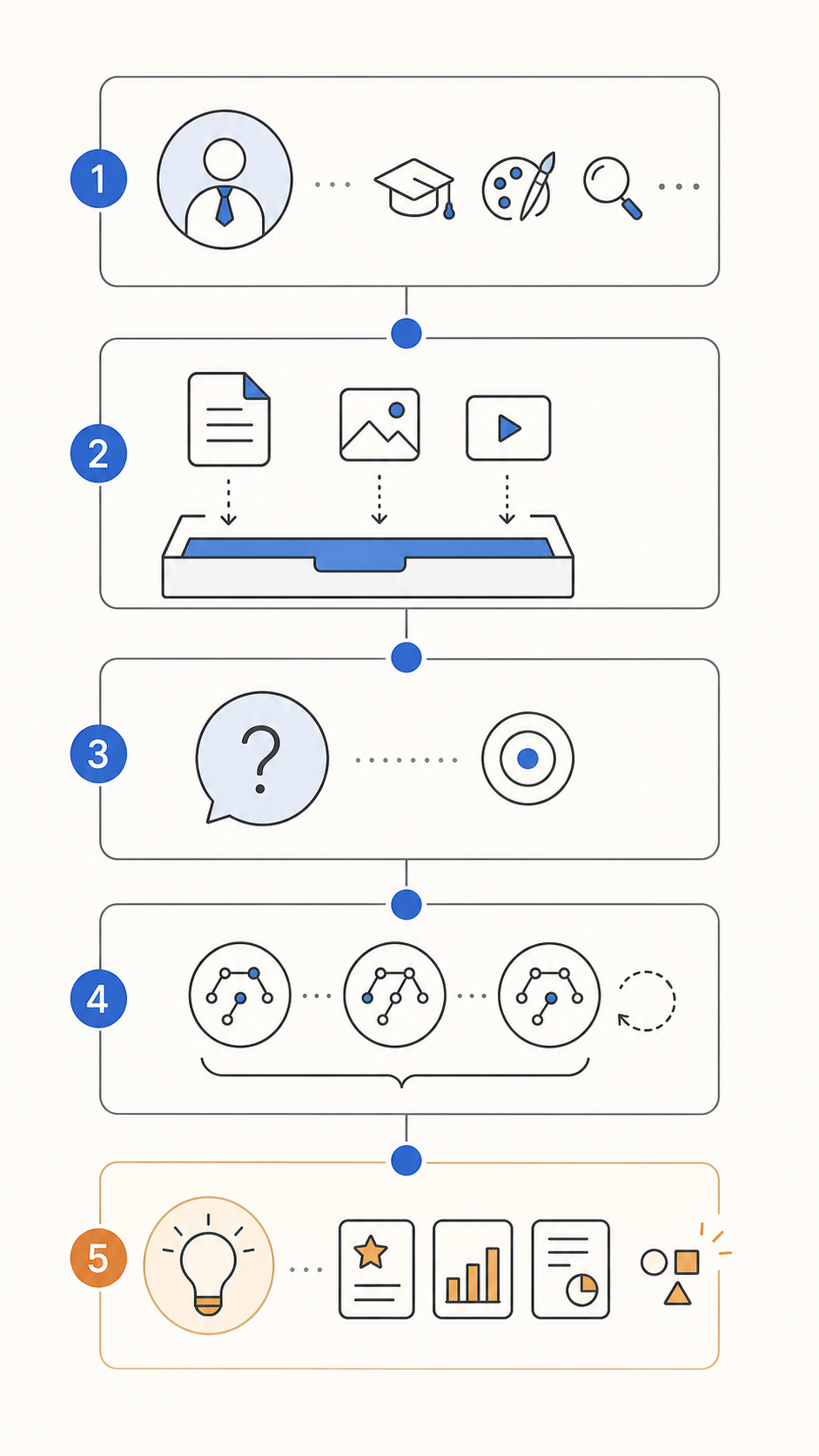
Later I set myself a simple rule: do not just ask and leave — have at least three exchanges with it.
Before you start, tell it whom to play, what to focus on, what it must not do, and when to begin the debrief. Perhaps you can open like this:
Please play a strict [client/boss/reviewer] and examine the assumptions, logic, data and boundary conditions in this material.
Use only the content I provide; if information is insufficient, point it out directly and do not fill it in yourself. Ask only one question at a time, follow up based on my answer, and do not answer for me.
When I say “Start the debrief”, then organise the key gaps, risks, evidence still needed and suggested revisions.
My goal and material: [paste the content here]
You can also have it explain “why this question matters”, to avoid being difficult for the sake of being difficult.
Sharp Questions Do Not Mean the Questions Are Right
Using a thinking partner does not mean handing judgement over to AI.
The gaps AI points out may not exist, and any data it cites must be re-verified. When client information, internal data or personal privacy is involved, you must also follow your organisation's rules — anonymising first if necessary, or choosing a local tool with clearer permission boundaries.
I keep the division of labour between AI and me very simple: AI helps me look from a few more angles, but which questions really hold and how the final decision is made remain my responsibility.
The next time you face the task you are “most afraid of being stumped on”, do not have AI write the answer for you first. Give it the material, assign it a role, then say: “Please take the opposing side and ask me your first question.”
AI helps me look from a few more angles; which questions really hold and how the final decision is made remain my responsibility.